Brows
Nano Hairstroke vs Microblading in Auckland: What Is the Difference?
21 September 2026
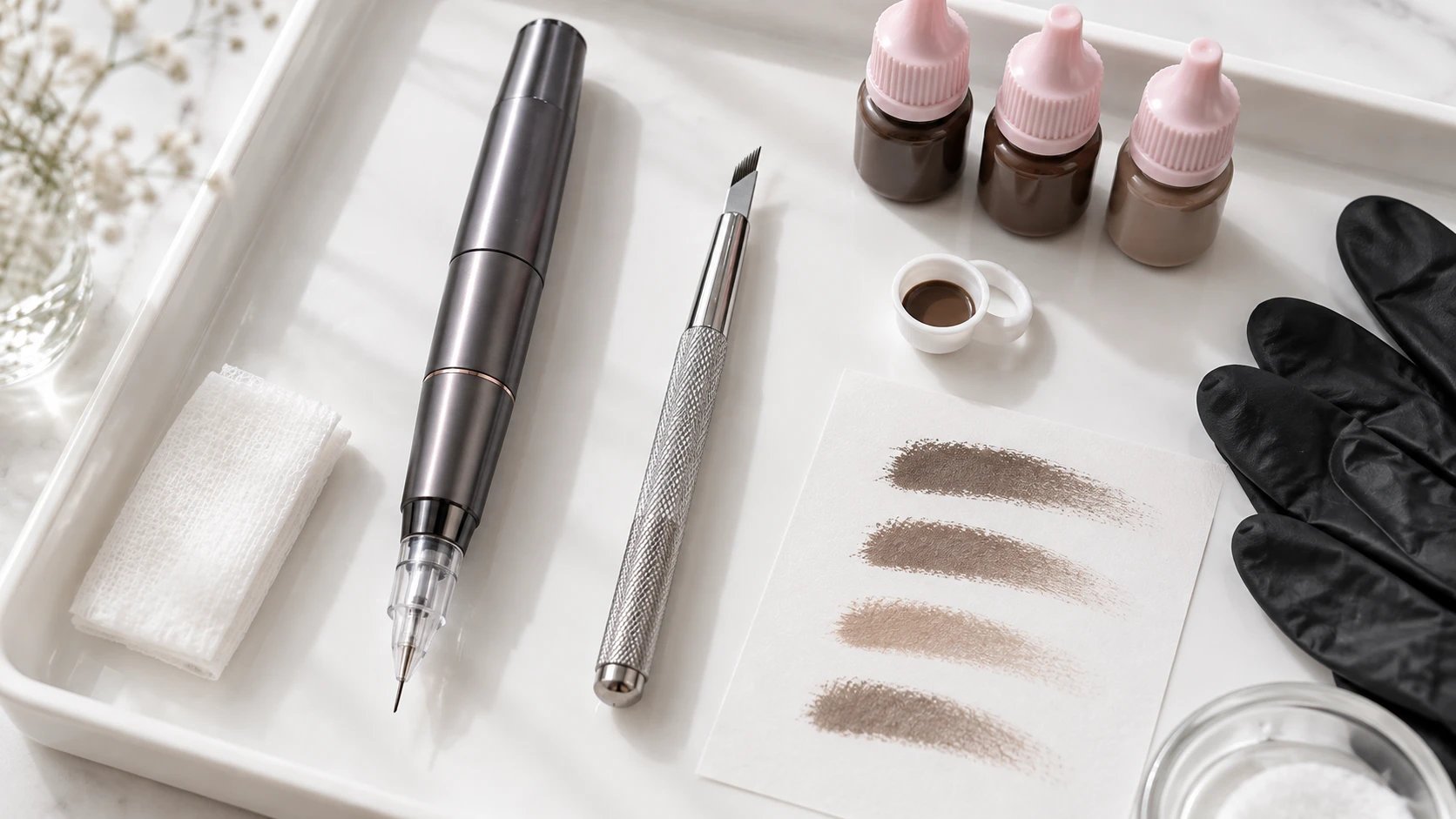
If you have been researching eyebrow tattooing in Auckland, you have almost certainly come across microblading. It is the name most people know. At Hannah Beauty in Mt Eden we do not offer it — we use nano hairstroke and shading instead.
This is the question we are asked most, so here is the full answer: what each technique actually does, why the difference matters years later rather than on the day, and which one suits your skin.
Both aim for the same result
Microblading and nano hairstrokes are trying to do the same thing: draw individual, hair-like strokes into the skin so that brows look fuller and naturally shaped rather than filled in.
The difference is entirely in how the pigment gets there, and that decides how the brows look once they have healed and how they age over the following years.
Microblading: a blade, by hand
Microblading uses a small handheld tool with a row of fine needles fused into a blade. The artist drags it through the skin to cut each stroke, then presses pigment into the cut.
It can look beautiful when it is fresh. The limitations show up later:
- The depth depends entirely on hand pressure, stroke by stroke. Slightly too deep in one place and the pigment sits lower than it should.
- Cutting is more trauma to the skin, which means more swelling, more scabbing and a less predictable heal.
- On oily skin, the strokes tend to blur. Oil pushes the pigment outwards as it heals, so fine lines soften into a smudge.
Nano hairstroke: a single needle, by machine
At Hannah Beauty, our aim is natural brows — brows that look like your own hair, not like a tattoo. Nano hairstroke is the most up-to-date technique for that, which is why it is the only brow technique we use.
It works with a single, very fine needle on a digital machine. Instead of cutting into the skin with a blade, the fine needle deposits each hair stroke, one by one. We then blend soft shading through the brow for fullness and depth.
Why it suits natural brows:
- Strokes as fine as real hair. A single needle deposits a finer stroke than a blade can cut, so each one reads as a hair rather than a drawn line.
- Consistent depth. The machine controls the needle's movement, so every stroke sits at the same shallow depth. That is what lets brows heal soft and even instead of patchy, blue or grey.
- Fullness without a drawn-on look. Soft shading between the strokes adds density while keeping the edges natural.
- Gentler on the skin. No cutting, so less swelling and an easier heal.
- Holds on oily skin. Because each stroke is deposited with a fine needle rather than cut open with a blade, it keeps its definition as it heals.
- Fades evenly and can be adjusted. The pigment softens gradually over the years without turning blue or red, so colour and shape can be refined as your features change.
Why brows turn blue, grey or red — and why depth matters most
This is the part most people do not hear about until their brows start to change.
There is rarely one single cause. How a brow tattoo ages depends on several things working together:
- Pigment composition. Every brow colour is a blend. Pigments that lean heavily on black tend to cool to blue-grey as they fade, while warmer, iron-oxide based pigments can drift reddish or orange.
- Depth. How deep the pigment sits in the skin.
- Saturation. Too much pigment packed in, especially over repeated sessions, looks heavy and dark and blurs the strokes.
- Skin undertone. The same pigment can heal cooler on one person and warmer on another.
- UV exposure. Sun breaks pigment down faster and unevenly, which speeds up any colour shift.
Of all of these, needle depth matters most.
Permanent makeup belongs in a shallow, precise layer of the skin. If the needle goes deeper than it should, the pigment settles below where it was meant to sit — and pigment viewed through more layers of skin scatters light differently, so it reads blue-grey no matter what colour went in. It is the same reason veins look blue under the skin when the blood inside them is not.
Pigment that sits too deep also migrates. Crisp strokes spread outwards over the years until they merge into one solid block of colour.
The other factors can be managed: choosing a pigment that suits your skin tone, putting in only as much pigment as the brow needs, correcting the colour at your refresh appointment, and wearing sunscreen. Pigment that sits too deep cannot be brought back up. That is why every session takes real time and care.
It is also why so many older brow tattoos in Auckland have turned blue, grey or reddish — and why correcting them makes up around 30% of our brow work. Consistent depth is not a detail. It is the difference between brows that soften gracefully and brows that need fixing.
Which is right for your skin?
Normal to dry skin — both techniques can heal well. Nano still gives finer strokes and more consistent depth.
Oily or combination skin — nano is the better choice. Microblading strokes tend to blur on oily skin.
Already had microblading that has faded or spread — this is correction work. Old pigment can usually be colour-corrected with neutralising pigment before new strokes go on. Read our guide to eyebrow tattoo cover-ups.
We look at your skin at the consultation and adjust the balance of hair strokes and shading to suit it, so you do not need to decide in advance.
How long does it last?
Nano brows fade gradually rather than all at once, and because the pigment is designed to soften evenly, they lighten without turning blue or red.
Most clients come back for a colour refresh every one to two years. How quickly yours fade depends on your skin type, sun exposure, and whether you use retinol, vitamin C or exfoliating acids on the area.
What it costs
At Hannah Beauty in Mt Eden:
| Session | Price |
|---|---|
| First session | $500 |
| Perfecting session, four to six weeks later | $200 |
| Refresh within 3–12 months (returning clients) | $250 – $350 |
| Refresh within 13–24 months (returning clients) | $400 – $500 |
Every stroke is deposited one by one with a fine needle, so a first session takes around an hour and a half to two hours, and the perfecting session about an hour.
Prices are current as of September 2026 and include GST. Consultations are $50.
A friendly note: we plan to raise our prices soon. Nano hairstroke is the most advanced brow technique we know of, and every set takes real time and care — that is what gives you brows that look natural and beautiful for years. If you have been thinking about it, now is a good time to book.
What healing looks like
- Days 1 to 3 — darker and bolder than the final result.
- Days 4 to 7 — flaking and lightening, often patchy.
- Days 8 to 21 — the colour can seem to disappear as it settles under the skin, then returns.
- Weeks 4 to 6 — the true healed colour is visible. This is when we do the perfecting session.
The short version
Microblading cuts strokes by hand. Nano hairstroke deposits them one by one with a fine needle on a machine. Both can look good on the day; the difference is skill in handling the machine — and with it, consistent depth and the right choice of pigment. That is what decides whether your brows fade softly over the years or turn blue and spread.
That is why we only do nano.
Book a consultation
We are in Mt Eden, Auckland, by appointment, and we speak Korean and English. If you are not sure which approach suits your skin — or whether existing brows can be corrected — book a consultation and we will look at it with you.
Ready to take the next step?
Book a consultation with Hannah Beauty in Mt Eden, Auckland — for treatments or academy courses.
Book now